
Dr Komal Verma Saluja, a final-year student at Government Medical College Kota (GMCK), has been awarded the "Researcher of the Year Award 2026" by the India chapter of the American College of Physicians (ACP). She is the youngest and first medical student to receive this prestigious accolade. Saluja's research includes identifying an imaging biomarker for early cognitive decline in type 2 diabetes and developing a diagnostic method for fatty liver disease using echocardiography. Her achievements have brought pride to GMCK and highlight the need for more novel diagnostic and therapeutic research in India.

Over 2,000 pulmonologists and healthcare professionals from India and abroad will gather in Jaipur for NAPCON 2026 to discuss the increasing burden of pulmonary diseases and the critical impact of air pollution on lung health. The conference, organised by the National College of Chest Physicians, India, and the Indian Chest Society, will feature discussions on diagnosis, management, and prevention of conditions like COPD and asthma, alongside advances in interventional pulmonology.
Researchers at the Indian Institute of Technology Bombay have developed an innovative, low-cost device capable of screening for anaemia and sickle cell disease using just a single drop of blood. This point-of-care approach measures blood smear length to detect differences in viscosity, which are indicative of these conditions. The patented device is designed for cost-effective manufacturing and ease of use, making it ideal for areas with limited access to conventional diagnostic laboratories. The technology is currently licensed to an IIT Bombay startup and is moving towards regulatory approval.

Sun Pharmaceutical Industries reported a 27 per cent year-on-year increase in consolidated net profit to 2,894.7 crore for Q1FY27, with revenue growing 10 per cent to 15,299.8 crore, driven by strong performance in India and innovative medicines.

L&T Technology Services (LTTS) CEO Amit Chadha announced that artificial intelligence is a net positive for the company, with six key focus areas expected to contribute 80% of revenue in five years. These areas, including digital manufacturing and AI infrastructure, are projected to deliver higher growth and margins, offsetting pricing pressures in traditional IT services. LTTS also inaugurated an NVIDIA-powered AI manufacturing lab in Bengaluru.

A new study challenges the common belief that menopause is a gradual process, revealing that the female body undergoes abrupt, "physiological cliff"-like changes in various health measures around the time of the last menstrual period. These shifts, observed in over one million women, begin more than a decade before menopause, offering a new window for preventive care.
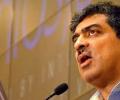
Nandan Nilekani, head of the task force on exam reforms, stated on Tuesday that technology and a systematic approach can solve the issue of question paper leaks. He suggested generating exam papers from a large question bank at the last minute to remove economic incentives for leaks and also proposed moving towards computer-based testing.
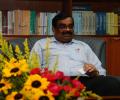
Researchers at IIT Kharagpur, in collaboration with the University of Illinois Urbana-Champaign, have developed a highly sensitive sensor technology. This innovation allows ordinary smartphone cameras to detect extremely tiny, invisible objects, potentially leading to low-cost, portable medical testing and other applications requiring the detection of minute substances.
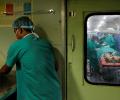
Prof Ajit Kumar Chaturvedi, Vice-Chancellor of Banaras Hindu University, highlighted Artificial Intelligence's transformative potential in healthcare, emphasising its role in augmenting doctors' capabilities and enhancing efficiency. Speaking at PGIMER's Foundation Day, he stressed the need for India to develop AI solutions tailored to its unique healthcare realities, moving beyond being a mere consumer of Western-trained systems. PGIMER Director Vivek Lal also detailed the institute's expansion and commitment to affordable healthcare.
Robotic surgery is poised to transform healthcare in Delhi, expanding access to specialised expertise through the Indian-developed SSI Mantra system. Delhi is emerging as a hub for advanced surgical care, with successful implementations at Rajiv Gandhi Cancer Institute, including pioneering telesurgery. This technology aims to make robotic surgery more accessible and sustainable, fostering an ecosystem for training and innovation.

SCTIMST and Invasive Technologies have launched "Chitra Core," a new drug-eluting coronary stent designed with significantly less metal to reduce complications. This indigenous innovation, developed in collaboration, aims to provide advanced and cost-effective cardiac care, building on decades of Indian medical device development. The institute is also developing a unique TiN-coated stent for global markets.
Uttar Pradesh Governor Anandiben Patel addressed AI Manthan 2.0, advocating for the comprehensive integration of Artificial Intelligence across all university subjects rather than as a standalone course. She urged universities to develop clear, time-bound AI roadmaps covering education, research, healthcare, and agriculture, emphasising indigenous AI development, employment creation, and the importance of "Safe and Trusted AI." The event also saw the formation of an AI Policy Advisory Group and an AI Implementation Group to drive these initiatives.

The Olympic Council of Asia has advised national bodies, including India, to limit their contingent sizes for the upcoming Asian Games in Aichi-Nagoya, Japan, due to the host nation's inability to accommodate more than 15,000 participants. This impacts support staff numbers, with India's contingent of 492 athletes requiring strict adherence to the 33% support staff cap. Organisers are implementing innovative accommodation solutions like container huts and a cruise ship.

Researchers at IIT Madras have patented a chemical-free antibacterial surface that physically eliminates harmful bacteria, including "superbugs," without relying on antibiotics or disinfectants. This innovative technology uses specially engineered nanostructures to rupture bacterial cell walls, offering a sustainable solution to Antimicrobial Resistance (AMR) for biomedical and public health applications.

A global research report by HCLTech indicates that integration has surpassed supply chain constraints as the primary challenge for the semiconductor industry. The study, which surveyed 300 senior leaders, highlights increasing dependency on semiconductors across industries, with 98% of enterprises more reliant now than three years ago and 99% expecting further increases. AI is also driving the strategic importance of semiconductor architecture.
Researchers at BRIC-RGCB in Thiruvananthapuram have developed a novel nanopore-based sensing technology. This innovation allows for the early and highly sensitive detection of biomarkers associated with neurodegenerative diseases like Parkinson's and ALS, addressing a critical challenge in current diagnostic methods. The technology, published in Nature Nanotechnology, uses self-assembling dual-diameter nanopore sensors to identify disease-specific biomarkers even at low concentrations.
Researchers at IIT (ISM) Dhanbad have developed an ultra-compact wearable antenna, measuring just 5x5x0.75 mm, designed to significantly enhance the performance of future healthcare devices, smart wearables, and wireless body communication systems. This innovation offers high-speed data transmission, wider wireless coverage, and a low Specific Absorption Rate (SAR), making it safe and efficient for prolonged use in Wireless Body Area Networks (WBANs).
A new study has identified a shared biological process that could explain chronic exhaustion in conditions like long Covid, PTSD, rheumatoid arthritis, chronic fatigue syndrome, and multiple sclerosis. Researchers found that despite different triggers, these illnesses converge on common biological systems, including immune and metabolic regulation, leading to profound fatigue. The findings suggest a deeper connection between these seemingly disparate disorders at a network level, rather than at an individual gene level.
Researchers at IIT (ISM) Dhanbad have secured a patent for a novel temperature-independent optical sensor designed to precisely measure structural tilt in two directions. This lightweight sensor, utilising Fiber Bragg Grating (FBG) technology, offers enhanced monitoring capabilities for various applications including bridges, robotics, aerospace, and geotechnical systems, promising low maintenance and long-term stability checks.

Students are learning to combine technology with agriculture, healthcare, biotechnology, architecture and fashion, explains Mandeep Singh, assistant professor and deputy dean, Lovely Professional University.

Computer-based testing can make the examination more secure and transparent. Ensuring equal opportunities to prepare will make it fair as well. India needs both, suggests Dibyasree Ganguly.
Six faculty members from IIT Madras have been awarded the prestigious ANRF J C Bose Grant, recognising their outstanding research contributions in engineering and science. The highly competitive grant provides Rs 25 lakh annually for five years to support frontier research.
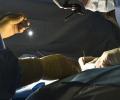
An Indian-American US Army surgeon in an innovative procedure removed a golf ball-sized tumour developed at the base of the brain by sending an endoscopic device through the patient's nose. Major Jagatkumar Patel, an anterior surgeon at the Walter Reed National Military Medical Centre near Washington, DC, along with neurosurgeon Army Lt Col Charles Miller, carried out the surgical procedure on Marine Corps Staff Sergeant Andy Archer, who lived with the tumour for 15 years.

Prime Minister Narendra Modi extended birthday wishes to Union Education Minister Dharmendra Pradhan, commending his significant contributions to the implementation of the National Education Policy. This praise follows the successful re-examination of NEET-UG, despite earlier controversies surrounding paper leaks.

Nasa astronaut Anil Menon, along with Russian cosmonauts Pyotr Dubrov and Anna Kikina, has embarked on an eight-month mission to the International Space Station (ISS) aboard a Soyuz MS-29 spacecraft, lifting off from Kazakhstan.

Omi Vaidya, known as Chatur from '3 Idiots', has publicly supported climate activist Sonam Wangchuk, who is on an indefinite hunger strike in New Delhi, drawing attention to Wangchuk's deteriorating health and the inspiration he provided for Aamir Khan's character in the film.
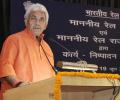
Jammu and Kashmir LG Manoj Sinha emphasised the critical need to translate scientific immunological knowledge into public health action. Speaking at the IMMUNOCON-2026 conference, he highlighted immunology's evolving role in healthcare, stressing continuous innovation and collaboration in areas like immuno-AI fusion, climate immunity, and translational medicine to combat infectious diseases and prepare for future global health threats.

The judgment is India's first to examine AI companies' use of copyrighted works for foundation models, setting an analytical framework for Section 52 of the Copyright Act.

Aamir Khan's comments that his 3 Idiots character Phunsukh Wangdu was not based on Sonam Wangchuk has triggered reactions from politicians, activists and social media users, with some accusing the actor of distancing himself from the educationist, who is currently on a hunger strike.

Opposition leaders across party lines have condemned the forced removal of climate activist Sonam Wangchuk from the Jantar Mantar protest site in Delhi, accusing the BJP-led central government of undermining democratic freedoms, curbing dissent, and choosing force over dialogue.
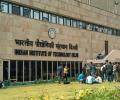
IIT Delhi, in collaboration with the University of Exeter, is developing cutting-edge sports technology, including wearable ultrasound sensors for injury prevention and helmets that can detect concussions in real-time, potentially revolutionising athlete safety and performance.
Chennai-based deep-tech startup The ePlane Company has successfully completed the assembly of its full-scale electric air taxi, the e200X. This prototype, designated PT-01, is now ready for ground testing, marking a significant step towards flight testing and eventual type certification. The versatile e200X is designed for passenger air taxi services, urban cargo transport, and air ambulance operations, aiming to leverage existing city infrastructure.
Jammu and Kashmir LG Manoj Sinha addressed the 'IMMUNOCON-2026' conference, stressing the importance of translating scientific immunological knowledge into public health action. He urged scientists to focus on precision medicine, immuno-AI fusion, climate immunity, and accelerating translational research to combat infectious diseases and enhance healthcare delivery.

The initiative is expected to begin with operations in Guntur, with both parties working towards enabling 10,000 daily drone flights across Andhra Pradesh over the coming year, a scale that could position the state among the largest commercial drone delivery networks globally.

Sun Pharmaceutical Industries reported strong consolidated numbers for Q4 FY26, with net profit rising 26 per cent year-on-year to 2,714 crore, despite continued weakness in its US generics business. Growth in innovative medicines and increased R&D investments are helping to offset these pressures.
The National Medical Commission is emphasising the importance of preparing doctors and healthcare systems for the responsible and effective use of artificial intelligence, highlighting the need for ethical and equitable AI adoption in healthcare.

FIFA refereeing chief Pierluigi Collina says the World Cup's new anti-time-wasting rules have been a major success, speeding up play, reducing injuries and improving discipline while defending VAR's controversial decisions.
Two South African scientists of Indian origin, Professor Salim Abdool Karim and Professor Keertan Dheda, have been awarded the Order of Mapungubwe for their contributions to public health, particularly in HIV/AIDS, tuberculosis research, and pulmonology.

The Andhra Pradesh government has launched a drone delivery initiative to provide healthcare services to remote tribal regions of Alluri Sitarama Raju district, transporting diagnostic samples, essential medicines, and critical medical supplies.
The Union Ministry of Health and Family Welfare has launched indigenous robotic technologies, Project Vimana and Project Operion, designed to perform life-saving surgeries on the battlefield, potentially revolutionising emergency care for injured security personnel.
